this glossary was made with the purpose of getting to know the definitions of most used words related to heat transfer in engineering in English.
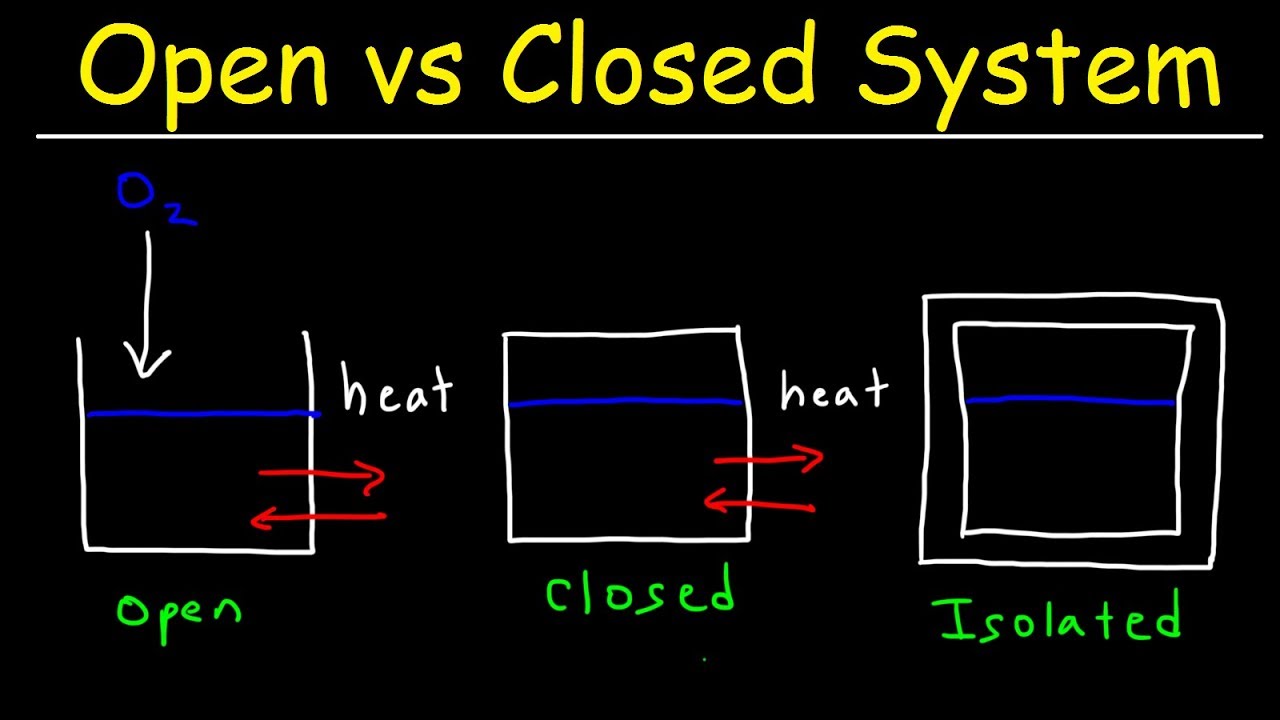
closed system
noun
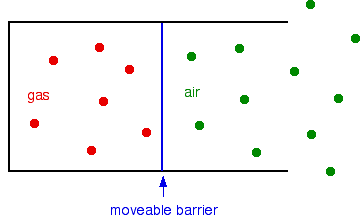
A closed system is a physical system that does not allow transfer of matter in or out of the system, though, in different contexts, such as physics, chemistry or engineering, the transfer of energy is or is not allowed.
Example: closed system is a physical system that doesn't exchange any matter with its surroundings
en: sistema cerrado
Conduction
noun
Conduction is the process by which heat or electricity passes through or along something.
Example: Temperature becomes uniform by heat conduction until finally a permanent state is reached.
en: conducción
consist of
verb
to be formed or made up of (specified things or people)
Example: Coal consists mostly of carbon
en: consistir de
Convection
noun
the movement caused within a fluid by the tendency of hotter and therefore less dense material to rise, and colder, denser material to sink under the influence of gravity, which consequently results in transfer of heat.
Example: Convection is the process by which heat travels through air, water, and other gases and liquids.
en: convección
Deal with
verb
to be about (something) : to have (something) as a subject Her speech dealt with health care and the nation's economy. The film deals with some serious issues.
Example: i had to deal with a lady whom seemed very upset.
en: Tratar con
Fixed mass
noun
Fixed mass scaling is used to prescribe mass scaling only at the beginning of a step and always scales the original element masses. When the scale factor is defined directly, the mass is scaled by the value assigned to the scale factor.
Example: Where the final solvent volume is not measured directly, a fixed mass of internal standard should be added to enable measurement of the volume, particularly for volumes less than 1 ml.
en: masa fija
heat transfer
noun
Heat transfer is a discipline of thermal engineering that concerns the generation, use, conversion, and exchange of thermal energy (heat) between physical systems. Heat transfer is classified into various mechanisms, such as thermal conduction, thermal convection, thermal radiation, and transfer of energy by phase changes.
Example: Heat transfer is a discipline of thermal engineering that concerns the generation, use, conversion, and exchange of thermal energy (heat) between physical systems.
en: transferencia de calor
inner surface
noun
the surface of the inner space of an object.
Example: the inner surface of the house is really hot,
en: superficie interior
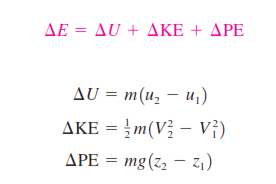
Internal energy
noun
Internal energy is defined as the energy associated with the random, disordered motion of molecules. It is separated in scale from the macroscopic ordered energy associated with moving objects; it refers to the invisible microscopic energy on the atomic and molecular scale. For example, a room temperature glass of water sitting on a table has no apparent energy, either potential or kinetic.
Example: does work on its surroundings, and the change in INTERNAL ENERGY (U) is equal to the heat added (Q)
en: energía interna
mass transfer
noun
Mass transfer describes the transport of mass from one point to another and is one of the main pillars in the subject of Transport Phenomena
Example: Mass transfer is mass in transit due to a species concentration gradient in a mixture.
en: transferencia de masa
open system
noun
An open system is a system that regularly exchanges feedback with its external environment. Open
systems are systems, of course, so inputs, processes, outputs, goals, assessment and evaluation, and
learning are all important. Aspects that are critically important to open systems include the
boundaries, external environment and equifinality.
Example: an open system in which mass or energy can be lost to or gained from the environment.
en: sistema abierto
outer surface
noun
The outside part or uppermost layer of something. facade. surface. exterior.
Example: The design includes an atrium between the outer surface and the glass-enclosed offices.
en: superficie exterior
radiation
noun
Radiation is energy that comes from a source and travels through space at the speed of light. This energy has an electric field and a magnetic field associated with it, and has wave-like properties. You could also call radiation “electromagnetic waves”.
Example: Solar radiation, often called the solar resource or just sunlight, is a general term for the electromagnetic radiation emitted by the sun.
en: radiación
total energy
noun
The total energy of a system is the sum of kinetic and gravitational potential energy, and this total energy is conserved in orbital motion.
Example: Objects with total energy less than zero are bound; those with zero or greater are unbounded.
en: energía total
undergo
verb
experience or be subjected to (something, typically something unpleasant, painful, or arduous).
Example: the baby underwent a life-saving brain operation